La tecnología FHSS (Espectro Ensanchado por Salto de Frecuencia) cambia rápidamente entre distintas frecuencias de radio para crear conexiones seguras y sin interferencias en los vigilabebés. Si te preocupa que hackers o interferencias interrumpan la señal de la habitación de tu bebé, la tecnología FHSS ofrece una alternativa fiable a los vigilabebés con Wi-Fi. Veamos si es la opción adecuada para tu familia.
Puntos clave
- La tecnología FHSS salta entre frecuencias para evitar hackeos e interferencias
- La tecnología DECT utiliza canales dedicados para una transmisión de audio más clara
- Ambas tecnologías superan a los vigilabebés con Wi-Fi en seguridad
- Momcozy ofrece soluciones con tecnología FHSS de confianza para los padres de hoy en día
- Unos sencillos pasos de seguridad pueden maximizar la protección de tu vigilabebés
¿Qué es la tecnología FHSS y por qué debería importarte?
La tecnología FHSS es un método de comunicación inalámbrica que originalmente fue desarrollado por el ámbito militar para evitar interceptaciones enemigas. Hoy en día, protege tu vigilabebés frente a hackers y fallos en la señal.
Cómo funciona
Imagina la tecnología FHSS como una conversación en la que cambias constantemente de emisora de radio. El transmisor y el receptor de tu vigilabebés acuerdan un patrón de frecuencias —a veces docenas de canales—. Van saltando entre estos canales rápidamente, siguiendo un patrón sincronizado que solo tus dispositivos conocen. Cualquiera que intente interceptar la señal necesitaría conocer exactamente ese patrón, que además cambia continuamente.
Principales beneficios para los padres
¿La mayor ventaja? La tranquilidad. La tecnología FHSS hace que sea extremadamente difícil que terceros accedan a la transmisión de video. Además, obtienes un audio y video más nítidos, ya que el sistema evita automáticamente las frecuencias saturadas. Si, por ejemplo, el control remoto de la puerta del garaje de tu vecino usa un canal, tu vigilabebés simplemente cambia a otro.
Ventajas de seguridad
A diferencia de los vigilabebés con Wi-Fi conectados a tu red doméstica, la tecnología FHSS crea un sistema cerrado entre la cámara y la unidad de padres. No hay conexión a internet que los hackers puedan aprovechar, ni contraseñas que descifrar, ni vulnerabilidades de firmware de las que preocuparse. El patrón de salto de frecuencia funciona como un objetivo en movimiento casi imposible de interceptar.
¿Qué son los vigilabebés con tecnología FHSS?
Los vigilabebés con tecnología FHSS son sistemas de monitorización dedicados que utilizan el salto de frecuencia para transmitir audio y video desde la habitación del bebé hasta una unidad portátil para los padres.
Definición básica
Estos vigilabebés suelen incluir una cámara para la habitación del bebé y una pantalla portátil para los padres. A diferencia de las aplicaciones para smartphone o las cámaras Wi-Fi, pueden funcionar mediante una conexión local cerrada, por lo que no estás transmitiendo la señal de tu bebé a través de tu red doméstica. Si buscas el estilo clásico FHSS “sin Wi-Fi”, un buen ejemplo es el vigilabebés con video de 1080p de Momcozy (BM01): está diseñado para funcionar sin Wi-Fi y ser resistente a hackeos, mientras te ofrece una pantalla de 5" y audio bidireccional para comprobar rápidamente cómo está el bebé.
Sin Wi-Fi
1080p Full HD
Larga duración de batería
Modo de pantalla dividida
Características y beneficios clave
La mayoría de los vigilabebés con tecnología FHSS ofrecen un alcance de hasta unos 290 metros en espacios abiertos, aunque las paredes y los suelos reducen esta distancia. También incluyen funciones prácticas que realmente importan a las 2 de la mañana: visión nocturna, audio bidireccional y una pantalla fácil de consultar de un vistazo. Por ejemplo, el BM01 combina una cámara Full HD de 1080p con zoom de 2x y 4x, un campo de visión panorámico de 360° y una batería recargable de 5000 mAh para una monitorización nocturna más prolongada, ideal cuando necesitas un dispositivo “fiable incluso si se cae el internet”.
Qué los hace destacar
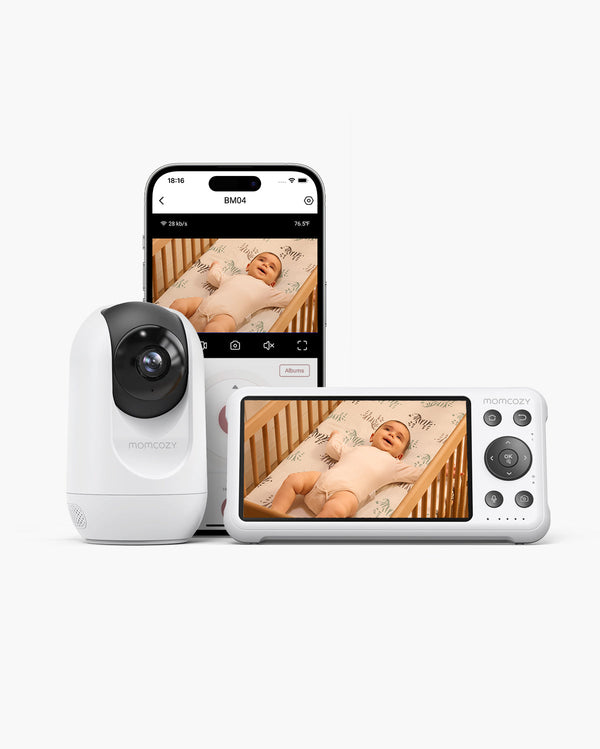
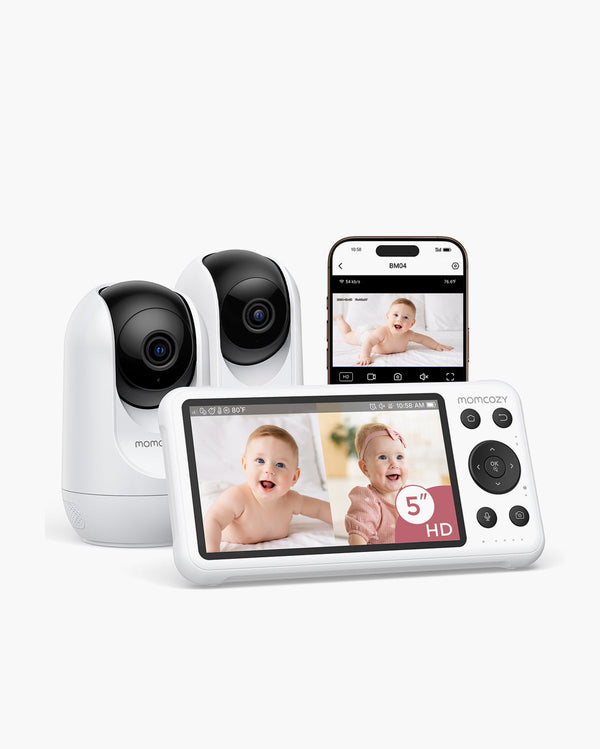
Su principal ventaja es la simplicidad de “configúralo y olvídate”: abres la caja, lo enciendes y ya estás vigilando, sin necesidad de configurar el router ni resolver problemas de apps. Y si te gusta esa experiencia sencilla en casa con FHSS, pero también quieres más flexibilidad para vigilar a tu bebé de otras formas, algunos padres prefieren una opción de modo dual como el vigilabebés inteligente Momcozy de 5 pulgadas y modo dual (BM04), que permite usar una app o la unidad de padres, incluye transmisión de video cifrada y añade herramientas centradas en la seguridad como alertas de movimiento en tiempo real, zonas seguras/peligrosas personalizables, detección de llanto y grabación, con la opción de conectar hasta 4 cámaras a medida que amplías tu sistema.
Aplicación o Unidad para Padres
Alerta de Zona de Peligro
Almacenamiento Compatible
Modo Vox
Aplicación o unidad para padres
Alerta de zona de peligro
Almacenamiento compatible
Modo Vox
¿Qué es la tecnología DECT?
DECT (Telecomunicaciones Inalámbricas Digitales Mejoradas) es otro estándar inalámbrico seguro, diseñado originalmente para teléfonos inalámbricos en Europa.
Aspectos básicos de la tecnología DECT
La tecnología DECT funciona en bandas de frecuencia dedicadas —normalmente entre 1920 y 1930 MHz (1.9 GHz) en Norteamérica— que están separadas del Wi-Fi, Bluetooth y otros dispositivos domésticos habituales. Esta separación elimina las interferencias de tu router, microondas o altavoces inalámbricos.
Principales ventajas
Su mayor atractivo es el audio cristalino. La tecnología DECT destaca en la transmisión de voz, por lo que dominó el mercado de los teléfonos inalámbricos. En los vigilabebés que solo transmiten audio, DECT ofrece una claridad excepcional. Además, es muy segura, ya que cada par de dispositivos DECT crea una conexión cifrada.
Funciones de seguridad y privacidad
Los vigilabebés DECT utilizan selección automática de canales y cifrado para proteger tu privacidad. Al emparejar los dispositivos, se establece una conexión segura a la que otros equipos DECT no pueden acceder. Aunque esta tecnología está pensada principalmente para audio, algunos modelos de video más recientes la incorporan para el canal de sonido, combinándola con otros métodos para la imagen.
¿Qué son los vigilabebés DECT?
Los vigilabebés DECT son dispositivos de monitorización que utilizan esta tecnología para ofrecer transmisión de audio segura y sin interferencias.
Características clave
La mayoría de los modelos DECT son solo de audio, centrados en ofrecer una calidad de sonido clara. Suelen ser más económicos que los vigilabebés con video y destacan por su excelente duración de batería. Las unidades para padres suelen ser compactas y fáciles de enganchar al cinturón o al bolsillo.
Ventajas frente a modelos tradicionales
En comparación con los antiguos vigilabebés analógicos, la tecnología DECT elimina la estática y las interferencias cruzadas que afectaban a generaciones anteriores. Tus vecinos no pueden captar accidentalmente los sonidos de tu bebé en su monitor. La calidad de audio es comparable a la que tendrías estando en la misma habitación.
Opciones populares
Varios de los mejores vigilabebés del mercado utilizan tecnología DECT. Muchos fabricantes han construido su reputación sobre un rendimiento de audio DECT fiable, aunque poco a poco están ampliando su oferta hacia modelos híbridos que incorporan funciones de video.
Tecnología FHSS vs. DECT: ¿cuál es mejor para ti?
Elegir entre la tecnología FHSS y DECT depende de tus necesidades específicas, tu presupuesto y tus preferencias a la hora de vigilar a tu bebé.
FHSS
Nivel de seguridad
★★★★★
El salto de frecuencia evita hackeos
Calidad de video
★★★★★
Excelente para transmisión de video
Calidad de audio
★★★★
Muy buena claridad
Rango de precios
$80 - $200
Ideal para
Monitorización por video, hogares grandes
DECT
Nivel de seguridad
★★★★★
Banda dedicada con cifrado
Calidad de video
★★★
Capacidad de video limitada
Calidad de audio
★★★★★
Calidad de sonido impecable
Rango de precios
$40 - $100
Ideal para
Monitorización de audio, departamentos
| Característica |
Tecnología FHSS |
Tecnología DECT |
| Resistencia a interferencias |
Buena: cambio automático de canal |
Excelente: espectro aislado |
| Facilidad de configuración |
Conectar y usar |
Conectar y usar |
| Duración de la batería (unidad de padres) |
8-12 horas aproximadamente |
10-15 horas aproximadamente |
| Requiere internet |
No |
No |
| Compatibilidad con múltiples cámaras |
Sí (2-4 cámaras) |
Limitada |
Guía rápida de decisión
Elige FHSS si:
✓ Necesitas monitorización por video
✓ Tienes una casa grande (más de 90 m²)
✓ Quieres compatibilidad con varias cámaras
✓ Prefieres el máximo alcance
Elige DECT si:
✓ Solo necesitas monitorización de audio
✓ Vives en un departamento o casa pequeña
✓ Buscas la mejor calidad de sonido
✓ Tienes un presupuesto más ajustado
¿Por qué elegir Momcozy cuando se trata de vigilabebés con tecnología FHSS?
Momcozy se ha consolidado como una marca de confianza en el sector de la vigilancia del bebé al combinar la tecnología FHSS con un diseño centrado en los padres.
Características de seguridad de Momcozy
Los vigilabebés de Momcozy utilizan tecnología FHSS avanzada con rangos de frecuencia ampliados, lo que garantiza seguridad y fiabilidad. Sus sistemas crean conexiones cifradas entre la cámara y la unidad de padres, asegurando que la privacidad de tu bebé esté protegida.
Características destacadas en los mejores vigilabebés
Los mejores vigilabebés de Momcozy incluyen pantallas grandes de alta resolución, visión nocturna por infrarrojos y una excelente duración de batería en la unidad de padres. Muchos modelos ofrecen visualización en pantalla dividida para varias cámaras, control de temperatura y control remoto de giro, inclinación y zoom. La interfaz está diseñada para ser intuitiva, sin necesidad de leer el manual.
Opiniones reales de padres
Los padres destacan de forma constante la facilidad de uso y la conexión fiable de los vigilabebés Momcozy. Muchos comentarios resaltan la claridad del video incluso en completa oscuridad y el amplio alcance que funciona en casas de varias plantas.
¿Cómo mantener seguro tu vigilabebés con tecnología FHSS?
Incluso con la seguridad que ofrece la tecnología FHSS, seguir algunas prácticas básicas ayuda a maximizar la protección de tu monitor.
Medidas básicas para mejorar la seguridad
- Si tu modelo permite actualizaciones de firmware, instala las actualizaciones del fabricante cuando estén disponibles.
- Coloca la cámara fuera del alcance de tu bebé y en un lugar donde no pueda manipularla fácilmente.
- Evita publicar fotos de la pantalla del monitor si muestran la distribución de tu casa.
Protege tu red
- Los monitores FHSS no dependen del Wi-Fi, pero si tienes un modelo híbrido con funciones inteligentes, protege tu red doméstica con una contraseña segura y WPA3.
- Desactiva los servicios en la nube que no utilices para reducir posibles puntos de acceso.
Consejos para una colocación adecuada
-
Coloca la cámara al menos a un metro de la cuna y orientada hacia abajo. Así tendrás una buena vista mientras mantienes los cables fuera del alcance de tu bebé.
- Evita instalar el monitor cerca de ventanas por donde personas desde el exterior puedan ver la pantalla por la noche.
Mantenimiento básico
- Revisa las baterías cada mes y cámbialas cuando notes que su capacidad disminuye.
- Limpia suavemente la lente de la cámara con un paño de microfibra.
- Comprueba periódicamente el alcance del monitor caminando por tu casa. Si notas que la señal se debilita, puede que necesites cambiar la ubicación de la cámara o de la unidad de padres.
Preguntas frecuentes
P1. ¿Cómo gestiona la tecnología FHSS la presencia de varios vigilabebés en el mismo vecindario?
Cada par de monitores FHSS utiliza su propio patrón de salto de frecuencia creado durante el emparejamiento. Incluso si tu vecino tiene exactamente el mismo modelo, tendrá un patrón diferente. Esto significa que no habrá interferencias con el monitor de tu vecino si también usa FHSS. Los canales saturados se evitan automáticamente y, gracias a la gran cantidad de canales disponibles, es muy poco probable que dos monitores interfieran entre sí.
P2. ¿Puedo añadir más cámaras a mi sistema de vigilabebés con tecnología FHSS?
Sí, puedes añadir cámaras adicionales a tu sistema FHSS. La mayoría de los vigilabebés FHSS permiten conectar hasta 4 cámaras como máximo. La unidad para padres puede alternar entre las transmisiones de video o mostrarlas simultáneamente en pantalla dividida. Antes de usar cada cámara adicional, deberás emparejarla con el monitor de padres siguiendo las instrucciones del fabricante. En la mayoría de los sistemas, el receptor para padres gestiona varias conexiones manteniendo una comunicación segura con cada cámara.
P3. ¿La tecnología FHSS consume más batería que otros tipos de vigilabebés?
La tecnología FHSS en sí no consume más batería que otras tecnologías inalámbricas. Los factores que más influyen en la duración de la batería son el tamaño y la resolución de la pantalla, el brillo, la calidad de imagen y la frecuencia de uso. La mayoría de los monitores FHSS incluyen funciones de ahorro de energía que apagan la pantalla mientras mantienen el audio activo. En ese caso, puedes obtener alrededor de 11.5 horas o más de autonomía. La cámara suele estar conectada a la corriente, por lo que la duración de la batería depende principalmente del uso del receptor para padres, no de la tecnología inalámbrica.
Conclusión: cómo elegir el mejor vigilabebés con tecnología FHSS para la habitación de tu bebé
La tecnología FHSS ofrece a los padres una forma segura y fiable de vigilar a sus bebés sin las vulnerabilidades de los dispositivos conectados a internet. Tanto si eliges FHSS como DECT, estarás tomando una decisión inteligente en términos de seguridad. ¿Lista para proteger la privacidad de tu bebé? Descubre la gama de vigilabebés con tecnología FHSS de Momcozy y encuentra hoy mismo la opción perfecta para la habitación de tu bebé.