Como madre o padre primerizo, hay un millón de cosas que tienes que hacer, y esterilizar los biberones es solo una de ellas. Pero es una tarea importante, ¿cierto? Después de todo, la salud de tu bebé depende de eso. Entonces, ¿cuándo puedes dejar de ser tan rigurosa con un proceso que toma tanto tiempo? Dejemos las sutilezas de lado y hablemos directamente de cuándo dejar de esterilizar los biberones del bebé, parar para ayudarte a encontrar las respuestas que se te han estado escapando.
La estación de esterilización: por qué es importante
Antes de profundizar en el cuándo y cómo dejar de esterilizar, repasemos brevemente por qué lo hacemos en primer lugar. Esterilizar los biberones no es solo una tarea que consume tiempo y agota a los padres. En realidad, es un proceso muy importante para proteger a tu pequeño de las bacterias que pueden causar enfermedades. Un recién nacido, con un sistema inmunológico aún en desarrollo, es mucho más vulnerable a estos microorganismos.
Pero a medida que tu bebé crece, es posible que empieces a preguntarte si tanta esterilización sigue siendo necesaria. Después de todo, probablemente ahora tu pequeño explorador intenta llevarse todo a la boca. Entonces, ¿cuándo es el momento adecuado para dejar de usar la estación de esterilización?
El gran debate sobre la esterilización: dudas frecuentes
Una preocupación común entre muchos padres respecto a la esterilización de los biberones es:
-
El efecto del plástico de burbujas:: Algunos padres se preocupan de que mantener todo excesivamente limpio pueda, en realidad, dificultar el desarrollo del sistema inmunológico del bebé. Es el clásico argumento de "déjalos comer tierra", pero aplicado a los biberones.
-
La carrera contra el tiempo: Seamos honestos, esterilizar biberones toma tiempo. Tiempo que podrías usar para dormir o, bueno, simplemente disfrutar de tu bebé.
-
Paranoia por los gérmenes: Por otro lado, muchos padres temen que suspender la esterilización pueda dejar a sus pequeños expuestos a un mundo lleno de bacterias dañinas. Al fin y al cabo, allá afuera es toda una jungla.
-
Sobrecarga de información: Con tantos consejos contradictorios por todos lados, no es de extrañar que muchos padres se sientan confundidos. Tu vecina dice una cosa, tu mamá otra, ¿y recuerdas ese libro de crianza que compraste, ese que acumula polvo en tu estantería?

Todas esas preocupaciones son completamente válidas, y no eres la única persona que las tiene. Pero no te preocupes, estamos a punto de aclarar algunas cosas sobre este tema tan delicado.
Reducir la frecuencia: cómo y cuándo es recomendable no esterilizar los biberones con tanta frecuencia
Volvamos al tema. ¿Cuándo es seguro ponerle fin a la rutina de esterilización? Saber cuándo dejar de esterilizar los biberones es fundamental y, como en muchos otros aspectos de la crianza, la respuesta es: depende. Hay varios factores que influyen al momento de decidir si es posible reducir la frecuencia de la esterilización:
- La edad de tu bebé
- Su estado de salud
- Tu entorno
El consenso general es que puedes empezar a reducir la rutina de esterilización a medida que el bebé crece. Pero, ¿qué edad es suficiente?
Los Centros para el Control y la Prevención de Enfermedades, según lo indica el Hospital Infantil de Texas, recomiendan esterilizar los utensilios de alimentación durante los primeros tres meses de vida del bebé, especialmente si nació prematuro o si tiene un sistema inmunológico débil. Después de este período, en bebés mayores y sanos, es posible que no sea necesario esterilizar todos los artículos de alimentación a diario.
Así que, si tu bebé tiene más de tres meses y goza de buena salud, podrías empezar a reducir la frecuencia de la esterilización. Pero recuerda, es un proceso gradual, no un cambio de un día para otro.
A continuación te presentamos una guía sencilla para ayudarte a empezar este proceso:
-
Empieza esterilizando cada dos tomas, en lugar de cada una.
-
Si todo va bien, empieza a esterilizar una vez al día.
-
Con el tiempo, incluso podrás esterilizar cada ciertos días.
Sin embargo, ten en cuenta que este es un consejo general. Siempre es mejor hablar con tu pediatra antes de realizar cualquier cambio en la rutina de alimentación de tu bebé.
La recta final: ¿cuándo puedes dejar de esterilizar por completo ?
Ahora viene lo más importante. Tal vez hayas escuchado que, una vez que los bebés empiezan a explorar el mundo con la boca, es decir, cuando se llevan todo a la boca como alrededor de los 4 meses, esterilizar ya no tiene mucho sentido.
La verdad es que… no tan rápido. Si bien es cierto que los bebés desarrollan su sistema inmunológico al estar expuestos a su entorno, los utensilios de alimentación siguen siendo un posible foco de bacterias dañinas. De hecho, el Servicio Nacional de Salud del Reino Unido (NHS) recomienda continuar con la esterilización por un poco más de tiempo.
Según el NHS, es fundamental esterilizar todos los utensilios de alimentación del bebé, incluidos los biberones y las tetinas, hasta que al menos cumplan los 12 meses de edad. Así es, un año completo de esterilización. Puede parecer un poco exagerado, en especial cuando tu bebé de 10 meses se entretiene feliz mordisqueando todo lo que tiene al alcance. Pero recuerda que los biberones y las tetinas pueden albergar bacterias de una forma que otros objetos no lo hacen. Son ambientes cálidos y húmedos, ideales para el crecimiento de gérmenes.
Así que, aunque puedas relajarte un poco con la rutina de esterilización a medida que tu bebé crece, lo mejor es continuar al menos un poco, hasta llegar al esperado primer cumpleaños.
Cuidado seguro del biberón: cómo esterilizar los biberones de tu bebé
Ya sea que aún estés en plena rutina de esterilización o que hayas comenzado a reducir la frecuencia, aquí tienes algunos consejos para mantener los biberones de tu bebé lo más limpios y seguros posible:
-
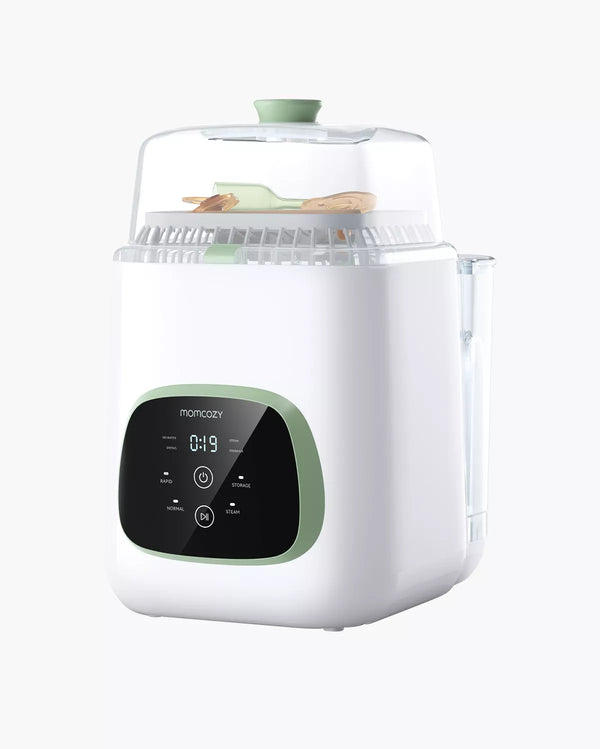
Invierte en un buen lavador y esterilizador de biberones: Consigue un dispositivo como el lavador de biberones MomCozy KleanPal Pro. Este práctico aparato lava, esteriliza y seca los biberones en un solo paso. ¡Eso sí que es ahorrar tiempo! El MomCozy KleanPal Pro es un lavador de biberones altamente eficiente y versátil que lava, esteriliza, seca y almacena automáticamente los biberones, las piezas de extractor de leche y los utensilios de comida para bebés. Con 26 potentes chorros de agua y un sistema de limpieza multidireccional, garantiza una limpieza completa y sin residuos en cada uso. Puedes elegir entre cuatro modos: lavado rápido, lavado normal, esterilizado + secado, almacenamiento y personalizar la configuración del lavabiberones según tus necesidades. El modo de lavado rápido limpia los biberones en solo 19 minutos, lo que lo convierte en una opción muy conveniente para padres con poco tiempo. Su diseño de doble nivel permite almacenar hasta cuatro biberones de la mayoría de marcas reconocidas, junto con otros artículos para bebés. Lo que realmente distingue a este dispositivo es su función de esterilización con vapor, combinada con un filtro HEPA H13 de grado médico. Esta potente combinación mantiene los objetos secos, estériles y libres en un 99.9% de partículas del aire hasta por 72 horas, garantizando un entorno seguro e higiénico para los utensilios de alimentación de su bebé. ¡Es como tener un asistente personal dedicado a mantener los biberones de tu bebé limpios y seguros!
Bottle Washer
Sterilizer & Dryer
Washes More Than Just Bottles
-
Lava antes de esterilizar: Asegúrate de lavar bien todos los biberones antes de esterilizarlos. Los residuos de leche y otros depósitos pueden impedir una esterilización adecuada si no se eliminan primero.
-
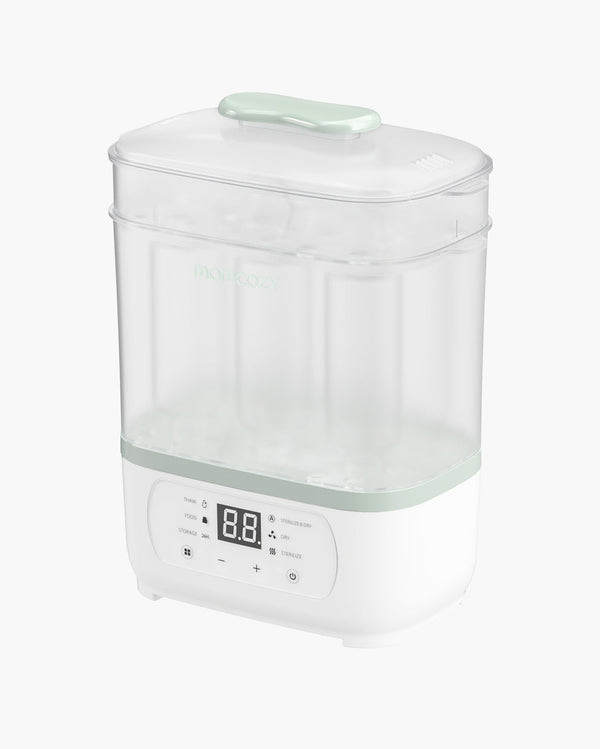
Revisa la calidad del agua: Si estas usando un esterilizador a vapor , este dependerá de la calidad del agua. El agua de caño puede dejar depósitos minerales en los biberones. Si esto ocurre, considera usar agua destilada.
-
Cuida los detalles: No olvides esterilizar todas las piezas pequeñas como tetinas, aros, tapas e incluso el cepillo para limpiar biberones.
-
El tiempo lo es todo: Sigue siempre las instrucciones del fabricante sobre el tiempo necesario para esterilizar. Más no siempre es mejor, el exceso de calor puede deformar los biberones y las tetinas.
-
Manéjalo con cuidado: Siempre lávate bien las manos antes de tocar los artículos esterilizados. Y, si es posible, arma los biberones inmediatamente después de esterilizarlos, mientras aún estén muy calientes, para minimizar el riesgo de contaminación.
-
El almacenamiento importa: Si no vas a usar los biberones esterilizados de inmediato, guárdalos en un recipiente limpio y cerrado dentro del refrigerador. Permanecerán estériles durante unas 24 horas.
Ten en cuenta que estas precauciones no aplican solo a los biberones. Trata de la misma forma a los chupones, mordedores y otros objetos que tu bebé suele llevarse a la boca. Keep in mind that these precautions are not only for bottles.
Batallas del biberón: preguntas frecuentes sobre la esterilización
¿Aún tienes dudas? No te preocupes, no eres la única. Aquí respondemos algunas de las preguntas más comunes que suelen aparecer en el gran debate sobre la esterilización:
P1: ¿Puedo dejar de esterilizar los biberones a los 6 meses?
R: Aunque quizá puedas reducir la frecuencia en esta etapa, no se recomienda dejar de esterilizar por completo. El NHS sugiere mantener la esterilización continua hasta al menos los 12 meses. Si tu bebé está sano y tiene más de 3 meses, probablemente puedas esterilizar con menos frecuencia. Pero recuerda que en todo lo relacionado con la salud de tu bebé, lo mejor es consultar con tu pediatra.
P2: ¿Puedo dejar de esterilizar los biberones a los 12 meses?
R: La mayoría de padres pueden dejar de esterilizar los biberones cuando su bebé cumple 12 meses, según el NHS. Pero esto solo aplica si el bebé está sano y no presenta problemas médicos. Si hay alguna condición de salud o un sistema inmunológico débil, es recomendable continuar con la esterilización más allá del primer cumpleaños. Ante cualquier duda, consulta con tu pediatra o profesional de salud.
P3: ¿Los biberones deben estar completamente secos antes de usarse?
R: Idealmente, sí. La humedad es un ambiente perfecto para las bacterias, así que lo mejor es utilizar biberones completamente secos. Si estás apurada, puedes secarlos con un paño limpio que no suelte pelusa. Algunos esterilizadores, como el MomCozy KleanPal Pro, incluyen una función de secado que te ahorra tiempo.
Para terminar: lo esencial sobre la esterilización de biberones
A veces navegar por todo lo relacionado con la esterilización puede ser confuso cuando se trata de los biberones. Pero aquí va lo esencial: esterilizar es muy importante mientras son recién nacidos y bebés pequeños, y es una buena práctica hacerlo hasta cierto punto durante el primer año.
A medida que tu bebé crece y su sistema inmunológico se vuelve más fuerte, puedes reducir gradualmente la frecuencia de la esterilización. Pero no botes ese esterilizador todavía; sigue siendo una herramienta muy útil en tu día a día como madre o padre.
Si hay una experiencia llena de preguntas y desafíos, esa es la crianza. Pero cada biberón que lavas y cada toma que preparas demuestran tu amor y compromiso con la salud de tu bebé. Así que date un reconocimiento, ¡lo estás haciendo bien! Y quién sabe, tal vez algún día te sorprendas recordando con cierta nostalgia esos días de esterilización. Bueno, probablemente no, ¡pero de que estás sumando puntos como madre o padre, no hay duda!
Cuídate, mantente limpio(a) y disfruta cada momento con ese pequeñito. Crecen demasiado rápido, antes de que te des cuenta, en vez del biberón, ¡te estarán pidiendo las llaves del auto!